
The importance of your brand is beyond critical. In the rat race that is entrepreneurship, it can become easy to get lost in the chase. You need leads, you need your finances managed, you need all of your ducks in a row. Like putting off an important visit to the doctor because of how busy you are, many people find themselves not putting much thought into developing their brand. And yet, brand development is a crucial component in getting your customers to show up in the first place. It’s what glues everything together, and keeps those same customers coming back. Brand building is an ongoing process of creating a strong, recognizable identity and emotional connection with your audience, which is essential for long-term success.
In this article, we’re going to explore every facet of the process of developing your brand in as thorough of detail as possible. In order to do that, you need to understand what we’re talking about in the first place. You see, there’s a difference between “brand,” “brand identity,” and “brand strategy.” Your brand is something you technically have no control over. Rather, it is how the public, and therefore the potential customer, perceives you. What you do have control over, however, is your brand identity and brand strategy. These are the nuts and bolts of building your brand. Use the right ones and your customers will see a well oiled machine. Use the wrong ones, and they’ll see you fall apart before you’ve left the parking lot. Your brand strategy is the “why” and “how” of your company. What is your mission? What makes you different? Who is buying from you? Why do you bring value? Your brand identity is the “what”. It’s tangible things like taglines, logos, color themes, and so on. A clear and consistent brand identity is the foundation of any strong online brand building. A brand development strategy is the plan for evolving and positioning your brand for long-term growth, ensuring your brand values and customer perceptions are aligned. To create an effective brand development strategy, it’s important to follow a structured, step-by-step process that makes your approach actionable and results-driven. Unlike a brand development strategy, a content marketing strategy focuses on specific marketing tactics and messaging to reach your audience, rather than shaping the overarching brand identity. Understanding the difference between content marketing strategy and brand development is key to building lasting brand equity.
Let’s use an actual company as an example…

Ferrari’s Branding:
- Brand: Arguably the penultimate symbol of the “fast luxury car” in the common public eye, Ferrari’s entire brand revolves around speed and heritage. They have a rich history in motorsport, with fans of their motorsport teams that are so intense, that there’s a saying that goes, “There’s two religions in Italy, the Catholic Church, and Ferrari.” Their car designs evoke shock and awe. Some see them as powerful symbols of wealth and status. Others see them as over the top and flashy. One thing is for certain, and it’s that they’re unforgettable.
- Brand Strategy: Ferrari’s goals center around extreme exclusivity, emotional resonance, and racing pedigree. They don’t just want to make cars. They want to make legends, ones that are proven around the world in professional races, and the stories of their racing drivers. They aim to sell that legend to people who love racing, luxury, and looking sexy.
- Brand Identity: The yellow logo with the black horse (the prancing horse). The Ferrari racing red color (rosso corsa). V12 engines that make that iconic scream. Their F1 team and related iconography (Charles Leclerc’s number 16). A common car design philosophy (sleek, aggressive, angular).
Brand equity, brand value, and brand recognition are built over time through consistent brand building efforts like Ferrari’s. These elements reflect the overall health, worth, and visibility of a brand in the marketplace, and are the result of strategic, long-term brand development. Ferrari’s digital and offline branding efforts have both played a significant role in shaping the brand’s legacy, ensuring their reputation and influence endure across generations.
So you understand what “brand” is. But why should you care? You see, developing your brand at face value is just about getting recognized, but it’s so much deeper than that. Brand development is an art form. Through colors, and sounds, and passions, and themes, you’re creating something worth interacting with. In a world where markets are more saturated than ever before, standing out doesn’t just draw attention. It keeps it. If you can keep someone’s attention in a world that’s become as quick as ours, you aren’t just offering a product. You’re offering an experience. This isn’t a concept just reserved for luxury brands. When you’re going above and beyond when you’re making a sale, when your product works as intended, when you demonstrate care and fantastic customer service, you’re developing your brand. Brand loyalty is built when you maintain a strong brand promise and deliver a consistent customer experience, leading to repeat business and advocacy. Your core values and brand vision are foundational elements that guide your brand development and help shape a consistent message that resonates with your audience. Attracting and understanding new customers through targeted outreach, engagement, and market research is also a vital part of a comprehensive brand development strategy, helping you expand your customer base and drive growth. You’re gonna get a reputation either way, so take action now and get it right, because it can make the difference between a multi-million dollar success, and an abysmal failure. After all, the only thing worse than having no brand, is having a brand that means nothing.
Building and maintaining trust is essential for standing out from the competition in the digital space. A strong brand presence, both online and offline, is crucial for becoming a memorable and influential brand that drives business growth.
Discovery and Market Research: Where You Should Start
The first step in brand development is simple. You need to answer the most crucial of questions: “Who are you?” This goes beyond what you sell. Like I said before, you’re constructing your own legend, down to the main character of said legend, your company. What is your company known for on a conceptual level? Open your mind up to broader ideas for this, beyond the common selling points of, “we’re cheap” and “we have a quality product.” Are you funny? Are you sexy? Are you clever? Are you moving? If you’re struggling to find a concept, here’s the one basic concept all the most successful brands have in common. Trust.
 Trust is the bedrock of any successful brand, especially in the digital world where customers have endless options and information at their fingertips. Consistency is key to building trust. Every touchpoint, such as your website, social media posts, marketing materials, and even your customer service, should reflect a unified brand identity. Develop brand guidelines that outline your brand voice, tone, and visual identity, ensuring that your messaging is always on-brand, no matter where your audience encounters you. A consistent brand identity not only boosts brand recognition but also reassures your audience that you’re reliable and professional. Ultimately, building trust is about more than just delivering a great product or service. It’s about showing up consistently, being transparent, and putting your customers first. By weaving these principles into your brand development strategy, you’ll create a strong digital brand that stands out in the marketplace, drives business growth, and achieves long-term success.
Next, you want to define your target customer. This can be a lot more specific than you think, and being precise about who your target customers are will make developing your brand way easier. Start by analyzing your existing customer base to understand their demographics, preferences, and behaviors. This insight can help you tailor your brand positioning and marketing strategies. It’s important to thoroughly research and define your target market, as understanding the specific group of consumers your brand aims to reach is essential for developing effective branding strategies that resonate with them. Don’t just think of what your target customers want from you. Think of what they want in general. What are their values? What gets them up in the morning? Are they upset about something that you can fix? In addition to your current customers, consider identifying potential customers and how their needs and preferences can inform your brand development strategy for online businesses. If you find the answers to these questions are not in line with how you’re developing your brand, you either need to develop your brand differently, or you need to aim for a different target customer. All of this helps to define your customer user persona. There are of course some general guidelines in how you should treat your customers, such as demonstrating kindness, giving them respect, and making it as easy as possible for them to purchase your product or service. Building a digital brand requires a clear understanding of the target market’s preferences and behaviors. Establishing credibility with your target audience isn’t just a nice-to-have. It’s essential for building a strong brand presence and driving long-term business growth. A well-thought-out brand development strategy is your roadmap to earning that trust, starting with a deep understanding of your audience through thorough market research.
Finally, you want to size up your market. Take a look at your competitors. What is their brand? Is it working? Pablo Picasso once said, “Good artists copy, great artists steal.” Turn the ideas of others into your own, without outright plagiarizing them. What would you like to think about your business? What can you develop through your brand strategy and brand identity to make others feel the same way?
This is a good point to start asking for the opinions of others. It can be easy to get tunnel vision when developing your brand, so always keep people around you who challenge the norms and bring fresh ideas to the table, while still believing in the same core concepts you do, (we’ll talk more about adaptability later in this article). Continue to get the thoughts of others throughout the entirety of this process.
Core Strategy: Building Your Frame
So you’ve answered the basic questions of brand development. Good job! Now you want to turn those ideas into something more tangible. This is when you’re gonna want to start writing things down, so open up a word document or get out a piece of paper.
 Start with your mission. What is the purpose of your company? Remember, this goes beyond just making money. Sure, you can say the purpose of your company is just to make money, but funnily enough, the most successful companies are the ones that focus on helping people, with money being more of a byproduct. Once you’ve established your purpose, develop a mission statement based on that purpose. Keep it short and sweet. People should be able to digest your goal as easily as possible, while still knowing exactly what your goal is. Consumers in 2026 prefer brands that share transparent, authentic narratives.
Before moving on, it’s essential to define your brand messaging. Brand messaging is the strategic communication of your brand’s identity, values, and personality across all digital channels. Establishing clear brand messaging ensures consistency and helps create an emotional connection with your audience, which is vital for building a strong online presence.
Next, address brand positioning. What niche are you filling in your market? What makes you different from your competitors? Here is where you can start to get more into specifics. Sure you might be cheap, or reliable, or of quality, or trustworthy, but are you kind? Do you use laughter and care to make customers feel seen in ways other companies don’t? Do you provide a unique service your competitors don’t? Defining your brand personality is crucial here, as it helps create an emotional connection with your audience and differentiates your brand in the digital space. A great example of this is Enterprise, the company from the cutthroat market of car rentals, that came up with a way to differentiate themselves that was so simple, yet so ingenious, it became their tagline. “We’ll pick you up.” When considering what makes you different, it’s important to clearly articulate your brand promise. This is the core value you commit to delivering to your customers, shaping their expectations and building trust. Additionally, clarifying your value proposition will help define what makes your brand unique and how you stand out in the market.
Finally, develop your brand architecture. This can mean things like having specific brand identities for specific products, like how different cars under the same brand have different names. Making your individual services have individual brand identities contributes to making them more recognizable, and making those individual services have brands that are in synergy with one another contributes to making your overall brand more recognizable. Of course, how individualized you make those identities is dependent on the business you’re running. For some companies, all you need is the brand name. For example, a lawn care company wouldn’t need specific brand identities for their services, as it might throw off customers if each part of the lawn care service is given a different name, when all they’re asking for is that you just make their yard look clean and cared for. The bottom line is you should build your brand architecture around your individual case. Think of it like using a highlighter to draw the attention of your customers to something specific. A great time to create a unique brand identity for a product is when it’s a product that you offer that your competitors don’t, like how Enterprise did in the example mentioned earlier.
Message, Narrative, and Brand Positioning: What Your Customers Hear
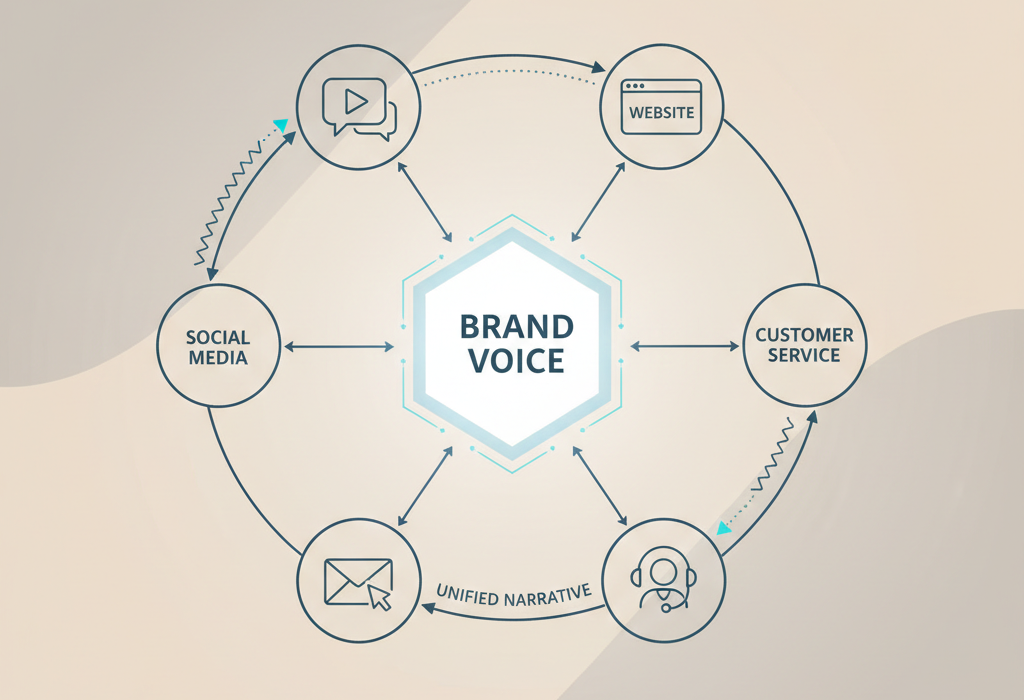
So far, our focus has mostly been on brand strategy, covering a lot of the broader concepts of who you are, and what your company does. Now it’s time to wrap it all up in a neat little bow. So far, you should have a good idea of what your company is, your company’s vision/mission, who your target customer is, what your competition is doing and how you differentiate yourself from them, and what products you may want to specifically highlight with your brand architecture. Now it’s time to put your strategy into action, and the first step is coming up with how you’re going to promote your narrative. You know what you want your customer to think of you, so how do you go about making that a reality? Start by developing a consistent brand voice that reflects your brand personality and values, ensuring your messaging is cohesive across all channels. Additionally, create a content strategy that aligns with your brand objectives and engages your audience.
Thankfully, a lot of this is common sense. Like I said previously, one of the key aspects to building a successful brand is establishing trust. So invest in company policies that build trust in your clients. Consider offering free returns or redos of a service if it was done poorly the first time, put an emphasis on enthusiastic and friendly customer service, and make your customers feel seen.
Here at Get The Clicks, we used to have a guy who worked here who we’ll call David. David worked for the company for over a decade, and when he finally quit, he told our CEO Stephan over dinner, “You know, I still really don’t understand how all that SEO stuff works.” As you can imagine, Stephan was flabbergasted. How had David worked for this company for so long and learned nothing? David then elaborated, “Whenever I’d have meetings with clients, I’d spend the first 45 minutes just hanging out. We’d talk about what we’d been up to, how their kids were doing, stuff like that. They always loved to talk. Then in the last 15 minutes I’d just update them on what we had done for their business, and we’d go on our way.” David had realized something a lot of people don’t. When you’re making a sale, you’re not just selling a product. You’re selling yourself. If the customer trusts you, they’ll buy from you. In fact, when the companies who worked with David realized he was quitting, a lot of them stopped working with us. They were here for David. David built the narrative of trust with those companies with his bare hands, brick by brick, another hero in our own legend. So when you’re constructing a legend of your own, consider how the people in your company control your narrative, and how having the right people on board builds trust.
Of course, trust isn’t the only thing that builds a good narrative with current and potential clients. Remember when I asked you earlier, “Who are you?” Now it’s time to take actions that promote those values that spoke to you. How do you promote the narrative of being funny? Do funny stuff! Social media is a great place to start. Make funny videos and post them on Facebook, Instagram, Tiktok, YouTube, and so on. Ryanair is a company that is known for offering incredibly cheap flights in Europe, and they’ve taken advantage of the power of social media to portray themselves as sassy, quippy, and with the times. Take a look at their YouTube shorts for some examples. Maybe you wanna be sexy? Do sexy stuff! Recent ad campaigns from Calvin Klein are a great example, where they’ll take attractive celebrities like Bad Bunny and Jung Kook and put them in ads where they do everything from stripping, to dancing, to working out in nothing but Calvin Klein boxers. See Jeremy Allen White’s ad with Calvin Klein as a good example.
Social media marketing is a powerhouse for any brand development strategy, especially for online businesses looking to accelerate brand growth and connect with their target audience. A successful brand doesn’t just post content. It creates conversations, builds communities, and turns followers into loyal customers. To make the most of social media marketing, focus on sharing engaging, authentic content that resonates with your audience’s interests and values. This could be anything from behind-the-scenes glimpses of your business, to user-generated content that showcases real customers using your products, to interactive polls and Q&A sessions that invite participation.
Social media marketing is a powerful tool for building credibility and engaging your customer base. Use your digital brand strategy to share valuable content, tell your brand story, and interact authentically with your audience. Content marketing, influencer partnerships, and regular social media posts help position your brand as a thought leader and foster a sense of community. When you respond to customer feedback and participate in conversations, you show that you value your audience’s input and are committed to continuous improvement.
Don’t underestimate the power of social media advertising. By investing in targeted ads, you can reach potential customers who might not have discovered your brand otherwise. Platforms like Facebook, Instagram, and LinkedIn allow you to zero in on specific demographics, interests, and behaviors, ensuring your message lands in front of the right people. Leveraging digital advertising across various digital channels is also crucial for expanding your brand’s reach and credibility. Digital advertising supports your overall marketing efforts and helps you achieve your strategic goals by amplifying your brand message to a wider audience.
Equally important is how you handle customer feedback on social media. Responding promptly and thoughtfully to both praise and criticism shows your audience that you care about their experience and are committed to continuous improvement. This not only builds trust but also strengthens customer loyalty, turning satisfied customers into brand advocates. By making social media marketing a core part of your brand development strategy, you’ll foster deeper relationships with your target audience and set the stage for sustainable brand growth.
Another way to promote your narrative is just telling a really good story. Brand storytelling is essential for communicating your values, inspiring emotional connections, and differentiating your brand in a competitive market. Talk about how your company was founded on your website, have a page where clients can “meet the team,” have another page talking about success stories in your company, or highlighting clients you enjoyed working with. You can even write a boilerplate, a simple one-paragraph describing your company’s mission, history, and offerings. Content marketing allows brands to connect emotionally with their audience through storytelling. A lot of building a great narrative at the end of the day comes down to going the extra mile. You have to remember that actions speak louder than words. This is usually the part where people fail, not because they don’t know what they’re doing, but because they don’t walk their talk.
Brand Identity: What Your Customers See

At this point your brand strategy should be reaching a point of clarity. Now it’s time to get into more of the nitty gritty. Let’s talk about brand identity.
In today’s digital landscape, developing your brand online is essential. Ensuring your identity is consistent across all digital platforms helps reinforce recognition and trust with your audience.
As stated previously, brand identity is the specifics of how you design your company at a tangible level. Let’s start with the most basic part, your name. There’s a lot of variety on what you can do here, but the common theme in developing a memorable brand identity is to keep things simple, so have that mentality here. Start by brainstorming, and start throwing random ideas at the wall. Think about what you sell, who it’s for, traits of your brand identity, and what you want/don’t want to signal. DoorDash for example simply takes two words and combines them to send a message. They dash to your door. Consider using a founder name for a sense of wisdom or authority, like how Ford Motor Company is named after their founder. You could also use a generally suggestive name, perhaps even purposefully misspelled. Lyft would be a great example in this case. You may be tempted to choose something more ambitious, like making up a word that doesn’t exist or using one that sounds completely unrelated to what you do. This can make you incredibly memorable if you achieve great success, and can be easy to copyright. Google and Apple are fantastic examples of this. However, there is a lot of risk involved in this naming convention. You’ll have to be ready to deal with people who may say, “What does that name have to do with your company?”
Next, let’s talk about your logo. It should be understandable and memorable from the moment you see it. Think of any logo. Chances are you thought of something so simple, it doesn’t even send a message about what the brand is at first glance. The Twitter bird, the YouTube play button, the McDonald’s golden arches, the Nike checkmark. Sometimes all you need for a good logo is the name of your company in a simple, yet memorable font. Disney, Coca-Cola, FedEx, Google, Amazon, their logos are all literally just their names. The key is keeping it simple and easy to remember. The minute a client sees your logo, they should easily digest it and know it’s you, even if it’s just your logo and nothing else.
For ecommerce brands, a strong digital branding strategy is crucial to differentiate your business and build trust with customers. Visual identity plays a key role in this process.
An ecommerce brand is a business that operates primarily online and relies on digital channels to reach and engage customers. Building a successful ecommerce brand requires effective brand storytelling, consistent visual and verbal branding, and a strong digital presence. These elements help foster trust, create emotional connections, and encourage customer loyalty in the competitive online marketplace.
Then, consider your color palette. What colors represent the values of your company? Your best tools in this process will be a combination of the meanings of colors, and the color wheel. Pick colors that represent the values of your company, or the services you provide. The color blue for example often comes across as trustworthy, secure, and wise, whereas the color red is often perceived as passionate, exciting, and urgent. Research the meanings of colors, and how clients may perceive those colors, along with how certain color combinations can evoke more specific messaging, (the combination of yellow and black for example is oftentimes associated with being cheap). Next, consult the color wheel, which is exactly what it sounds like: colors arranged into slices on a wheel. Consider using colors that match with one another. Analogous colors for example, are colors that sit next to each other on the wheel. This can create a sense of harmony and cohesion. Complementary colors on the other hand are completely opposite of one another on the wheel. They contrast each other in a way that makes them individually more vibrant and intense. As you can imagine, the more different colors are on the wheel, the more they’ll stand out from one another, and the more similar they are, the more they’ll come across as part of a cohesive whole. Consider this fact when choosing which colors to represent your brand identity. Oh, and a final, crucial tip. Whenever you choose a specific color, or even a font for that matter, make sure you write down exactly what was used. For colors, write down the exact color code of the colors you like, and for fonts, write down the exact font you are using. To maintain brand consistency, always use the same colors, fonts, and logo style across all digital platforms.
Consistent branding involves applying uniform colors, tone, and style across all digital touchpoints.
Finally, consider other forms of brand identity that make you stand out as unique. The most common example of this is a tagline, or catch phrase, or motto. “Just do it,” “finger lickin’ good,” “eat fresh,” “the best a man can get,” and so on are great examples of this. They send a message about what the company provides, or what they believe in, often in a way that shows a certain part of their personality. M&Ms for example uses the phrase, “melts in your mouth, not in your hands.” This not only demonstrates a level of quality in their product, but also an understanding of the difficulties a consumer may face when eating chocolate from one of their competitors. Another example may be a particular voice, or mascot, like an anthropomorphized animal symbolizing a football team, or a celebrity doing a series of ads with a particular company. Even a specific artstyle can be a part of your identity, like the art style used in animated “red bull gives you wiiiings” ads. Unique elements like these contribute to your brand’s legacy, helping establish long-term recognition and emotional connection with your audience.
It’s again important to note that when digesting all of this that, oftentimes, less is more. Simplicity is everything in brand development.
A well-designed website that offers a seamless user experience is crucial for establishing credibility.
Internal Organization and Adaptability: Making Sure Everyone is On The Same Page
At this point, you should have all of your ducks in a row. Remember how I keep saying to write things down? Now you’re going to want to organize whatever you wrote into a nice, clean document called a “brand guide,” that describes the exact goals of how you want to cultivate your brand, your brand strategy, and your brand identity. This is something all of your employees should read, and be able to access at any time. Develop protocols and set expectations for what exactly needs to be done in order to cultivate your narrative. Specify the key aspects of your brand identity in a way that is easy to understand. You can even consider creating a training workshop for whenever you roll out your brand strategy, so that you ensure your employees know what they need to do to send the message you’re trying to send. Make sure your internal marketing efforts are clearly aligned with your brand strategy, so that every action taken to promote your business supports your overall brand goals.
 You should also consider letting your employees and/or people you trust look over this document and give their thoughts. Make them put themselves in the shoes of a potential customer. Is the brand appealing? How could it be more appealing? You’ll find as you develop your brand that things will likely need to change as you find what niche you fit best in within your market. Be willing to stay flexible, and if your business is a newer one, take advantage of the fact that you still have time to define yourself in a way that might be different than originally planned. Regular brand audits help companies stay aligned with their core messaging and improve brand consistency.
When it comes to making changes to your brand, it can often feel like trying to balance on a knife’s edge. If you don’t change enough, you’ll get swallowed up by competitors who are willing to do what you don’t. Change too much, and you’ll lose your original vision and, “jump the shark.” The key is finding a balance between these two, where you preserve your original goals and intentions, while providing new and innovative ideas. Indeed, it is a very challenging balance to achieve. You have to be willing to listen to others, while being ready to filter out bad ideas, even if that means going against the crowd and making an unpopular decision. You have to trust your gut and intuition, without letting your ego take over, or letting tunnel vision blind you. The moment you stop progressing is the moment your company dies, but remember that this is a marathon, not a sprint. If you find you need to make such a drastic change to your company to stay relevant that it changes the very basis of who you are, chances are you shouldn’t try to change, but rather start something else entirely. All good things come to an end.
A fantastic example of when a rebrand went swimmingly was when “Dunkin Donuts” rebranded to just “Dunkin.” You may not have even noticed it. It certainly was a subtle change, but if you look them up you’ll see they usually only call themselves “Dunkin.” Why? Because they’re not just a donut company. They sell breakfast, other treats, and coffee. The change is subtle, yet simultaneously sends a clear message. “We aren’t just a donut shop.” It’s almost stupid how simple of a change it is, and that’s what makes it brilliant. A good lesson to learn here is that if you are ever going to make a change to your branding, small and subtle changes are your best friend. The change should be just enough to be noticeable, without being so small that it has no effect.
Of course, not all rebrands go well. You may have recently heard of Cracker Barrel’s attempt at a rebrand, but in case you haven’t, they made the decision to both change the interiors of their restaurants to be more modern, along with changing their logo to no longer have the person in the chair, along with an overall simpler design. The result? Overwhelming online backlash. The reasoning was that one of Cracker Barrel’s main selling points was nostalgia. Memories of seeing relatives over breakfast, old school American family values, the vintage photos, ads, and tools lining the walls, all of these things sent a very particular message of Southern hospitality. There was a certain “vibe” to it all, and when Cracker Barrel went to make the previously stated changes, it killed the very thing that made Cracker Barrel so unique and special. Thankfully, Cracker Barrel heard the online complaints and immediately withdrew from the change. Like anything in business, there’s always risk involved, so take this as a lesson in not only the importance of sticking to your brand identity and appealing to your target customer, but also the importance of learning from your mistakes, and listening to the people around you.
Optimizing for Search Engines: Making Your Brand Discoverable
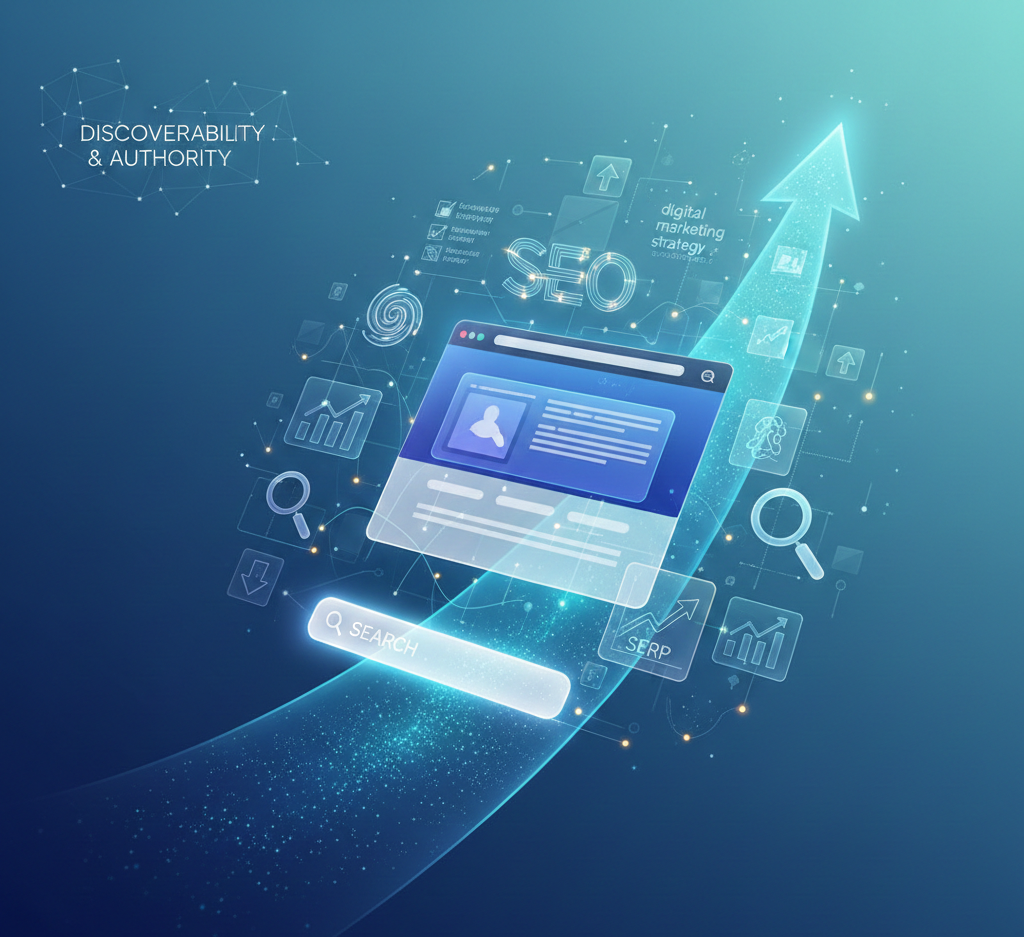 Search Engine Optimization (SEO) involves optimizing your website and content to rank higher in organic search engine results. In 2026, SEO extends beyond traditional search engines to include AI answer engines and social media search. High-quality, relevant content attracts and engages your audience while establishing your brand as an authority in your industry.
In today’s digital marketing landscape, search engine optimization (SEO) is non-negotiable for any business that wants to achieve long term success and a strong digital presence. SEO is all about making your brand discoverable to your target audience when they search for solutions you offer. Start by conducting thorough keyword research to uncover the terms and questions your potential customers are using in search engines. These insights should guide your content strategy, ensuring that your website, blog posts, and landing pages naturally incorporate relevant keywords in a way that feels authentic and helpful.
But SEO isn’t just about keywords. Your website needs to be technically sound, mobile-friendly, fast-loading, and secure with HTTPS. This provides a seamless user experience that search engines reward with higher rankings. Don’t overlook the importance of meta descriptions, headings, and alt text, all of which help search engines understand your content and improve your visibility.
Building high-quality backlinks from reputable websites is another critical factor in boosting your brand’s authority and trustworthiness online. The more credible sites that link to your content, the more search engines will view your brand as a trusted resource. By prioritizing search engine optimization as part of your digital marketing strategy, you’ll drive more organic traffic, increase your brand’s digital presence, and lay the groundwork for sustainable, long-term success.
Creating a User-Friendly Website Experience
 Your website is often the first impression potential customers have of your brand, so it needs to reflect your brand strategy and support your digital brand strategy from the ground up. A user-friendly website isn’t just visually appealing. It’s intuitive, fast, and accessible on any device. Start by implementing a responsive design that adapts seamlessly to smartphones, tablets, and desktops, ensuring a consistent experience for every visitor.
Website speed is crucial; slow-loading pages can drive users away before they even see what you offer. Optimize images, streamline your code, and use reliable hosting to keep load times short. Security is another top priority. Display trust badges and SSL certificates prominently to reassure visitors that their data is safe.
A clear, concise content strategy is essential for guiding users through your site and helping them find the information they need to make informed decisions. Use straightforward navigation, logical page structures, and compelling calls to action to lead visitors toward conversion. By focusing on these elements, you’ll not only improve customer satisfaction and conversion rates but also build a strong digital brand that stands out in a crowded online marketplace. A user-friendly website is the backbone of an effective digital brand strategy, supporting your business objectives and setting the stage for long-term success.
Measurement and Optimization: How to Know Your Brand is Working
You’ve accomplished a lot so far, to the point that you have a brand strategy and identity that is both understood and actively being implemented. So, how do you know that your plans are actually working? Tracking brand equity and brand value are key metrics for assessing overall brand health and the effectiveness of your brand development strategy for online businesses.
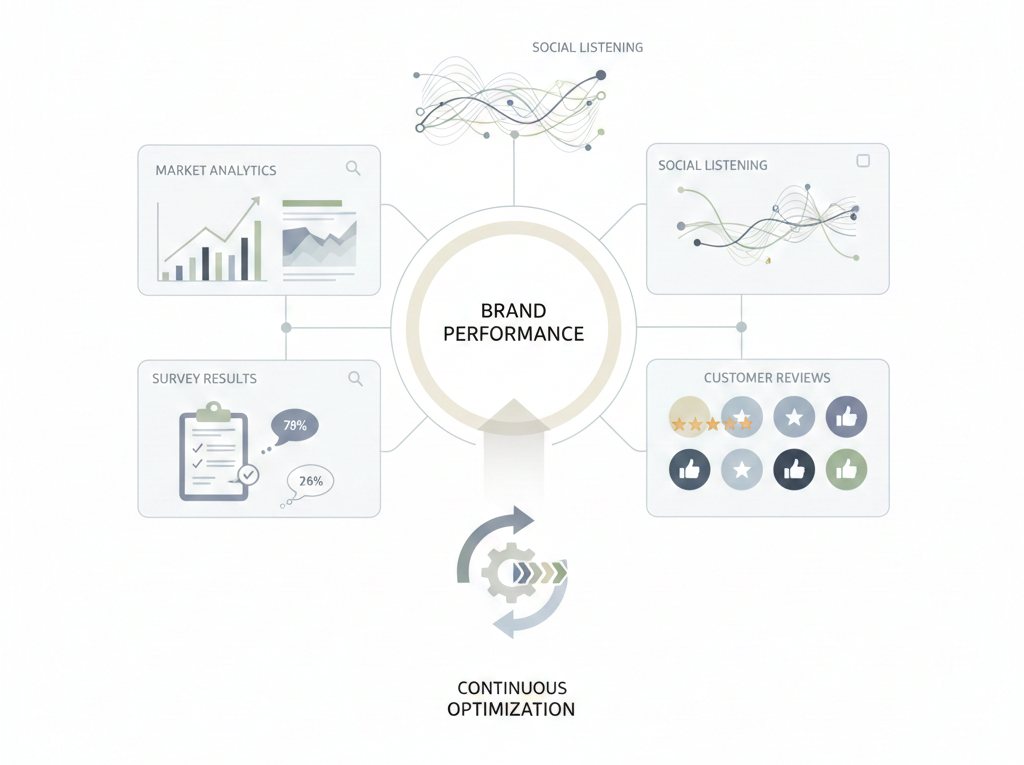
The most basic tactic would be to ask customers directly, via a survey. Surveys are something to be careful with, and can very much be a double edged sword. At face value, it provides an easy way to collect data about how a customer feels about your brand, the experience of working with you, and so on. However, surveys are often positively biased, due to customers not wanting to sound mean. The best solution here is to ensure complete anonymity of anyone who goes through with the survey, so that it is impossible for the customer answering the survey to face any repercussions for their opinions. You also want to give your customers a reason to spend their time filling out a survey in the first place, such as a discount for their next visit. Finally, you want to keep the questions as consistent as possible. Carefully consider each question you’ll use in your survey, as changing the wording of a question can have a drastic effect on results, and make it difficult to keep track of trends. For example, there’s a big difference between asking, “Name brands you think of for X,” and “Have you heard of Brand A?” Important questions to consider asking include:
- How satisfied are you with your experience?
- How likely are you to use us again?
- What words come to mind when you think of our company?
- What mattered to you most when choosing us?
- Was the timeline for completing our service acceptable?
- Did we set expectations accurately?
- How confident did you feel in our expertise?
- Did you ever feel caught by surprise in a way that felt unfair because of something we did? Explain.
- What can we do to improve?
- Do you feel you got good value for what you bought?
Measuring brand performance requires establishing clear tracking metrics aligned with brand objectives.
Like many other parts of brand development, you want your survey to be as simple as possible. It’s frustrating to take part in a survey that just goes on and on, so try to ask questions that are as simple and comprehensive as possible, while keeping your survey as short as you can. Generally speaking, you don’t want to go any further than 10 questions max. Use answering systems that are easy to comprehend and answer like “on a scale of 1-10”. Make the survey as easy to access as possible, like providing a link or a QR code that immediately takes the customer to it if they click it after a purchase.
Another obvious source of feedback is reviews. Like with surveys, you should offer a reward for people who go out of their way to write a review for them, like a discount for a future purchase or something else along those lines. Google reviews and reviews on your website are a good place to start, but paying attention to other forms of feedback are also important. What are the common complaints customer service receives? What are the comments saying on your social media posts? Are you getting signs that people are enjoying your services? Are they mentioning you online, and/or posting photos of a job well done? One of the best cues you can get that you’re doing a really good job is if you get a loyal base of repeat customers. “Whenever I have problem X, I always call company Y,” isn’t something people just say in ads. It’s a real life phenomenon, and cultivating a loyal group of customers is one of the most authentic ways to give proof to the rest of the market that you’re someone who can be trusted.
If you’re able to track data like phone calls, chat logs, email threads, and so on, track them. This not only allows you to collect data on a customer at an individual level (which helps them to feel seen when you remember something they mentioned months ago), it also allows you to gauge certain things you may not have been able to gauge before. Maybe they were more frustrated during that call than you originally picked up on, maybe you misinterpreted an email, and so on. Like with many other concepts in this article, it all boils down to keeping things as simple as possible, while going above and beyond for the customer.
Continuous monitoring of performance metrics helps identify areas for improvement in brand strategies. Gathering and analyzing data is essential for measuring the performance of digital brand initiatives. Establishing a cadence for measuring results is necessary to assess the success of a digital brand strategy. Using analytics tools helps brands track audience behavior and preferences for better decision making.
Industry and Use-Case Solutions: Specific Problems Require Specific Solutions
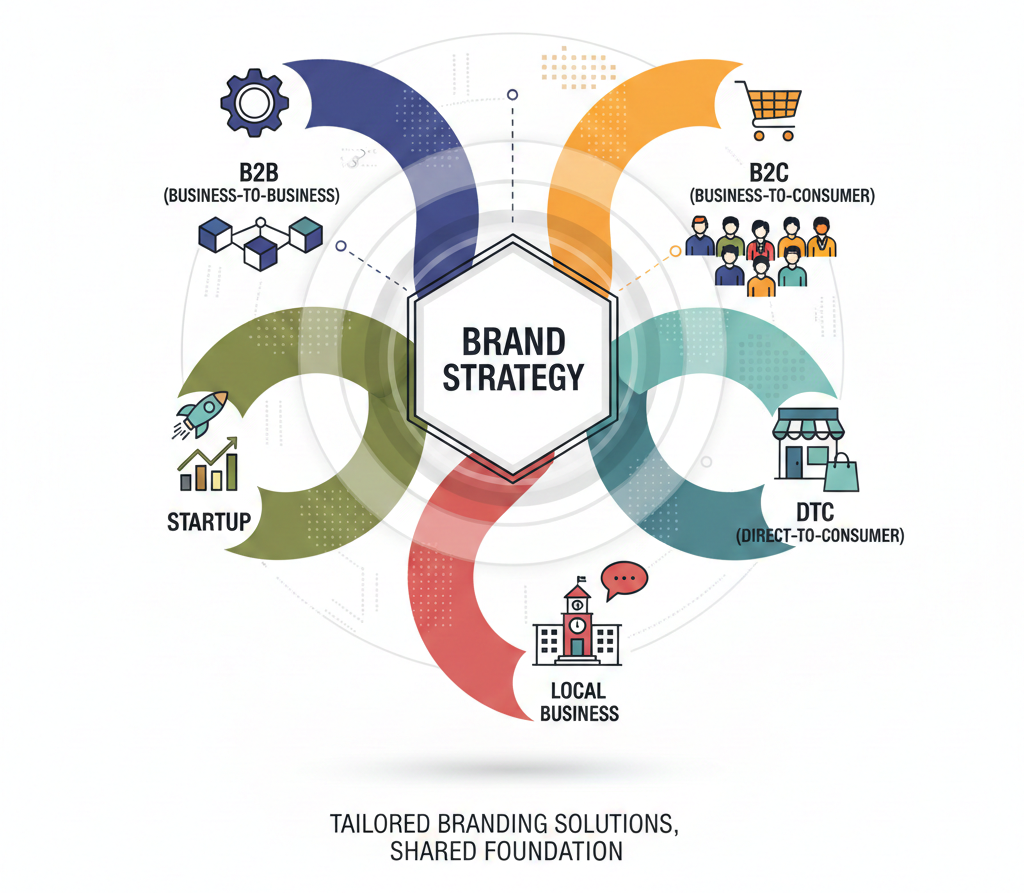
Now that we’ve gone over every detail we can about general tactics for developing your brand, we’re going to talk about more specific tactics that are dedicated to specific sorts of service businesses. The types of businesses we will be talking about are the following:
- B2B: Business to business refers to when a business specializes in selling to other businesses.
- B2C: Business to consumer refers to when a business specializes in selling to individual consumers (in this case through a middleman like a retail store).
- DTC: A subset within B2C that has no middle men whatsoever. You purchase directly from their brick and mortar store, or from their website.
- Start-up: A brand new company developing a unique product, service, or form of technology, aiming to scale rapidly and either completely disrupt a current market, or begin a market of their own.
- Local business: A business that serves a specific geographic area and benefits from digital marketing strategies tailored to attract nearby customers.
Let’s start with B2B tactics. When you’re selling to another business, you’re going to find the decisions behind purchasing your product/service are more driven by rationality and risk-mitigation than usual. Trust, credibility, and clarity are going to become more important than hype, so adjust your strategy and identity accordingly. In this world, “better” isn’t as good as “proven.” Statistics, case studies, and other forms of concrete evidence that you can show to the business interested in your product or service will become your bread and butter. You want to reduce perceived risk as much as you possibly can. Show your customers good numbers, and remind them that numbers don’t lie. Communicate to customers what you do exactly, and make sure expectations are clear, honest, and realistic. It’s never good to be a charlatan, but in a B2B setting, it’s especially dangerous.
Next, you have B2C, specifically in the context of selling through a middleman, like a retail store or online shop. Here you have two kinds of customer to contend with, the company carrying your product/service, and the customer who will consume said product/service. A lot of the rules for appealing to a company in B2B apply here, where you want to make it clear to your middleman that you’re a safe bet. A lot of these issues are circumvented by online sales, where you can easily list products/services on websites like Amazon, Etsy, or Fiverr. Once you’ve proven that your product sells online, you can then start going to brick and mortar stores to sell your product/service there. Just know that in both online and retail cases, you’ll likely be giving a cut of your profits to whoever carries you. Now it’s about reaching your customer. Most people spend seconds making a decision on what to buy, so make it obvious why you’re the correct choice. Look appealing with visuals, and have your prices down. Online marketing and leveraging social media platforms are crucial for reaching and engaging your target customers in the B2C space.
Next, you have DTC, where you’re selling directly to your customers without a middleman. The benefit to this is more control, but without another company showing your product, you’ll have to work harder to become visible. It’s easier to be seen on Amazon at first than it is to get your website ranking on Google. Thankfully, in terms of branding, you get a lot more freedom here. When working with consumers in particular, especially one on one like here in the DTC format, customer service is everything. The experience does not end at checkout. Generate hype, and bring your personality and fun side to the forefront. Professionalism here can be overrated, depending on what you sell, so keep that in mind, especially when thinking about who your target customer is. Online marketing and building a strong presence across social media platforms are essential for DTC brands to connect directly with their audience. Omnichannel presence is also essential for reducing friction in the customer journey. By ensuring your brand is visible and consistent across multiple channels, such as your website, social media platforms, and physical locations, you make it easier for customers to interact with your business wherever they are. Also, don’t forget that when developing your marketing tactics, it’s important to create social media strategies tailored to your audience. Understanding your target customers allows you to craft content and campaigns that resonate on each social media platform, increasing engagement and brand loyalty.
Finally, you have start-ups. This is a particularly unique challenge, because your tools become limited. If you’re trying to brand a company that’s fresh on the block, you don’t have much testimony or evidence to prove you’re worth people’s time, if you even have any at all. Focus on what you can control. Make sure clarity is in abundance. Your primary goal is that people immediately understand what you do, and why it matters. Use a founder story, expertise signals, and demos as substitutes to build credibility. Keep in mind that start-ups evolve quickly, so keep your brand strategy flexible and avoid rigid systems you’ll likely outgrow. Avoid buzzwords that create skepticism. For example, don’t say things that are vague and can’t be backed up, like “world-class,” “game-changing,” “innovative,” and so on. If you are these things, then give evidence as to why you are these things. Do you meet a specific standard? What makes you different exactly? Why specifically are you the best of the best? For start-ups, conducting keyword research and optimizing your website for search engines is critical to improving your visibility and attracting early adopters. It’s important to note the shift from traditional marketing, which focused on pushing products, to modern brand development strategies that emphasize creating brand experiences, differentiation, and values.
Conclusion: What It All Boils Down To
Brand development is about far more than providing a good product for a good price. It’s about telling a story, it’s about creating art, it’s about making your customer’s life as easy as possible, while doing every single thing you can to make the customer feel like you’re not someone who just wants something from them. You’re a human being, just like they are, and by developing a brand that goes above and beyond, you can create a form of connection that seems impossible to those looking from the outside.
Now it’s time for you to write your own story, to weave your legacy into your market with your memorable brand identity, and the passion/authenticity of the strategy behind it. A strong brand development strategy for online businesses not only drives growth but also helps establish a lasting brand’s legacy in your industry, ensuring long-term recognition and emotional resonance with your audience.