
The importance of your brand is beyond critical. In the rat race that is entrepreneurship, it can be easy to get lost in the chase. You need leads, you need your finances managed, you need all of your ducks in a row. Like putting off an important doctor’s visit because you’re busy, many people don’t put much thought into developing their brand.
And yet, brand development is a crucial component in getting your customers to show up in the first place. It’s what glues everything together and keeps those same customers coming back. Brand building is an ongoing process of creating a strong, recognizable identity and emotional connection with your audience, which is essential for long-term success.
Here’s the simplest way I can say it without getting poetic: your brand is what makes people exhale when they’re deciding whether to trust you. If your market is crowded (and it is), people don’t have time to run a full investigation on every option. They scan for signals, make a risk call, and move on.
That’s why our company slogan is Less Argghhh, More Ahhhhh. The “Argghhh” is confusion, uncertainty, and that gut feeling customers get when they’re not sure if they’re about to waste money. The “Ahhhhh” is clarity, confidence, and the sense that someone has this handled. That’s what a good brand does. It takes the chaos out of buying.
In this guide, we’re going to explore every facet of the process of developing your brand in as much detail as possible. We’re not going to treat brand development like an arts-and-crafts hobby where you pick a color palette and call it a day. We’re going to treat it like what it actually is:
A system that reduces perceived risk, creates demand, improves conversion, and builds loyalty over time.
And yes, we’ll still talk about logos and colors. We’re just going to put them in their proper place: as the visible proof of a deeper strategy.
Brand vs Brand Identity vs Brand Strategy (What You Control vs What You Don’t)
To develop a brand effectively, you need to understand what we’re talking about in the first place. There’s a difference between “brand,” “brand identity,” and “brand strategy.”
Your brand (you don’t control this directly)
Your brand is how the public, and therefore the potential customer, perceives you. You can influence it. You can shape it. But you can’t force it.
If you’ve ever heard a company described in one sentence, that sentence is the brand.
- “They’re the ones who actually answer the phone.”
- “They’re expensive, but they’re worth it.”
- “They’re sketchy.”
- “They’re the pros.”
None of those sentences comes from a mission statement. They come from experience + consistency + reputation.
Your brand strategy (this is the “why” and “how”)
Your brand strategy is the plan and logic behind your company’s presence in the world.
It answers questions like:
- What is your mission?
- What do you do better or differently?
- Who is buying from you?
- Why do you bring value?
- What do you want to be known for?
- What are you willing to not be?
A brand strategy is not “we’re friendly.” It’s how you make “friendly” show up reliably in the way you sell, the way you deliver, and the way you communicate.
Your brand identity (this is the “what” people recognize)
Your brand identity is the tangible layer:
- logo
- colors
- typography
- tagline
- website feel
- design patterns
- photography style
- tone of voice in writing
- the “look and feel” people recognize in a second
A clear and consistent brand identity is the foundation of strong online brand building. But it’s not the whole building. It’s the paint and architecture that make the house recognizable.
Brand development strategy (the long-term plan)
A brand development strategy is the plan for evolving and positioning your brand for long-term growth, ensuring your brand values and customer perceptions are aligned.
It’s not the same thing as content marketing. Content marketing is a tactic. Brand development is the system behind the tactics.
If a content marketing strategy is “what we post,” a brand development strategy is “why anyone should care that we exist.”
Let’s Use an Actual Company as an Example (Ferrari)
Let’s use an actual company as an example…
A red Ferrari supercar on a historic racing circuit, representing speed, luxury, exclusivity, and Ferrari’s motorsport heritage.

Ferrari’s Branding
Brand:
Arguably, the penultimate symbol of the “fast luxury car” in the common public eye, Ferrari’s entire brand revolves around speed and heritage. They have a rich history in motorsport, with fans of their motorsport teams that are so intense that there’s a saying that goes, “There’s two religions in Italy, the Catholic Church, and Ferrari.” Their car designs evoke shock and awe. Some see them as powerful symbols of wealth and status. Others see them as over-the-top and flashy. One thing is for certain, and it’s that they’re unforgettable.
Brand Strategy:
Ferrari’s goals center around extreme exclusivity, emotional resonance, and racing pedigree. They don’t just want to make cars. They want to make legends, ones that are proven around the world in professional races, and the stories of their racing drivers. They aim to sell that legend to people who love racing, luxury, and looking sexy.
Brand Identity:
The yellow logo with the black horse (the prancing horse). The Ferrari racing red color (rosso corsa). V12 engines that make that iconic scream. Their F1 team and related iconography (Charles Leclerc’s number 16). A common car design philosophy (sleek, aggressive, angular).
Brand equity, brand value, and brand recognition are built over time through consistent brand building efforts like Ferrari’s. These elements reflect the overall health, worth, and visibility of a brand in the marketplace and are the result of strategic, long-term brand development. Ferrari’s digital and offline branding efforts have both played a significant role in shaping the brand’s legacy, ensuring their reputation and influence endure across generations.
Now here’s the part that matters for your business:
Ferrari isn’t just recognized because they have a logo. They’re recognized because every single touchpoint reinforces the same promise:
- this is elite
- this is fast
- this is heritage
- this is not for everyone
- and that’s the point
That’s not “branding fluff.” That’s strategic consistency. And in your industry, the same mechanism applies. The only difference is what you’re trying to signal.
A roofer is not a Ferrari. An estate planning attorney is not Ferrari. A local home services company does not need to act like a luxury brand to build trust.
But they do need to answer the same question Ferrari answers instantly:
“Why should I choose you over other options that look similar at first glance?”
So You Understand What “Brand” Is. But Why Should You Care?
Developing your brand at face value is just about getting recognized, but it’s so much deeper than that.
Brand development is an art form. Through colors, and sounds, and passions, and themes, you’re creating something worth interacting with. In a world where markets are more saturated than ever before, standing out doesn’t just draw attention. It keeps it.
If you can keep someone’s attention in a world that’s become as quick as ours, you aren’t just offering a product. You’re offering an experience.
This isn’t a concept just reserved for luxury brands. When you’re going above and beyond when you’re making a sale, when your product works as intended, when you demonstrate care and fantastic customer service, you’re developing your brand.
And here’s the practical, non-poetic translation:
Brand is how you reduce perceived risk before the sales call
Most people don’t buy because they’re inspired. They buy because they feel safe.
Especially in the real world of local services and professional services, where your ideal buyer is often thinking:
- “If this goes wrong, I’m stuck with the consequences.”
- “If this is a scam, I’m going to feel stupid.”
- “If they disappear, I’m back at square one.”
- “If I pick the wrong option, it’s my fault.”
That’s the emotional reality of buying. People may talk rationally, but they decide with risk.
Brand loyalty is built when you maintain a strong brand promise and deliver a consistent customer experience, leading to repeat business and advocacy.
And yes, you’re gonna get a reputation either way. So take action now and get it right, because it can make the difference between a multi-million dollar success and an abysmal failure.
After all, the only thing worse than having no brand is having a brand that means nothing.
Building and maintaining trust is essential for standing out from the competition in the digital space. A strong brand presence, both online and offline, is crucial for becoming a memorable and influential brand that drives business growth.
Discovery and Market Research: Where You Should Start
 The first step in brand development is simple. You need to answer the most crucial of questions:
“Who are you?”
This goes beyond what you sell. Like I said before, you’re constructing your own legend, down to the main character of said legend: your company.
What is your company known for on a conceptual level?
Open your mind up to broader ideas for this, beyond the common selling points of “we’re cheap” and “we have a quality product.”
Are you funny? Are you sexy? Are you clever? Are you moving?
If you’re struggling to find a concept, here’s the one basic concept all the most successful brands have in common:
Trust.
But here’s the important nuance competitors rarely explain clearly:
Trust is not a value. Trust is an outcome.
People don’t trust you because you say, “trust us.”
They trust you because you create conditions where trust becomes the rational choice.
In other words: trust is built through mechanisms.
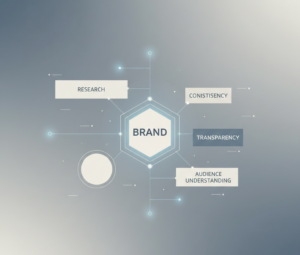
Here are a few trust mechanisms that consistently work online, especially for service-based businesses:
- Clarity: people immediately understand what you do and what happens next
- Proof: results, reviews, case studies, examples, credentials
- Consistency: the same message shows up everywhere without contradictions
- Transparency: people can see what’s happening, not just hope it’s happening
- Risk reversal: guarantees, clear expectations, and fair policies
- Responsiveness: you answer the phone, you reply, you follow through
This is why our internal mantra is “we don’t guess, we measure.” We’re not saying that because it sounds cool. We say it because measurement is a trust mechanism. It tells the customer: you won’t be in the dark with us.
And in 2026, buyer confusion is amplified by one huge factor:
AI has made marketing noisier, not clearer
A lot of business owners are overwhelmed right now. They’re hearing “AI” from every direction, and they’re not sure what’s real, what’s hype, and what they should actually do next. That confusion is explicitly showing up as a customer pain point.
So if you want to build a brand in this environment, you need to build one that reduces confusion. Make the buying decision feel clean.
A simple diagnostic question:
When someone lands on your site, do they feel:
- “Okay, I get this. I know what to do next.”
or - “Ugh. This looks like everyone else. I’m not sure what I’m paying for.”
That emotional reaction is brand in real time.
Define Your Target Customer (More Specific Than You Think)
Next, you want to define your target customer. This can be a lot more specific than you think, and being precise about who your target customers are will make developing your brand way easier.
Start by analyzing your existing customer base to understand their demographics, preferences, and behaviors. This insight can help you tailor your brand positioning and marketing strategies.
But don’t just think of what your target customers want from you. Think of what they want in general:
- What are their values?
- What gets them up in the morning?
- Are they upset about something that you can fix?
- What are they afraid of when they hire someone like you?
- What are they tired of hearing from your competitors?
In addition to your current customers, consider identifying potential customers and how their needs and preferences can inform your brand development strategy for online businesses.
If you find that the answers to these questions are not in line with how you’re developing your brand, you either need to develop your brand differently or you need to aim for a different target customer.
All of this helps define your customer user persona.
And here’s a point worth saying plainly: a “target customer” is not just an industry.
“Roofers” is not a target customer.
“Estate planning attorneys” is not a target customer.
Those are categories.
A target customer is closer to:
- The owner of a roofing company who wants a hands-on agency, prefers leads by phone, and cares about cost per lead because waste makes them feel sick.
- The attorney who needs legitimacy, consistency, and professionalism because one sloppy brand impression makes them look risky.
You can still be kind. You can still be respectful. You can still make it easy to purchase. That’s universal.
But the brand signals that matter most will change depending on the buyer.
Size Up Your Market (And Steal Like an Artist)
Finally, you want to size up your market. Take a look at your competitors. What is their brand? Is it working?
Pablo Picasso once said, “Good artists copy, great artists steal.” Turn the ideas of others into your own, without outright plagiarizing them.
What would you like people to think about your business? What can you develop through your brand strategy and brand identity to make others feel the same way?
And here’s the key detail: when you analyze competitors, don’t just look at what they say. Look at what they prove.
If everyone claims “results,” who shows receipts?
If everyone claims “experience,” who shows the team, the process, and the work?
If everyone claims “transparency,” who actually lets the customer see what’s happening?
This is also a good point to start asking for the opinions of others. It can be easy to get tunnel vision when developing your brand, so keep people around you who challenge the norms and bring fresh ideas to the table, while still believing in the same core concepts you do.
Continue to get the thoughts of others throughout the entirety of this process.
Core Strategy: Building Your Frame
 So you’ve answered the basic questions of brand development. Good job.
Now you want to turn those ideas into something more tangible. This is when you’re gonna want to start writing things down, so open up a Word document or get out a piece of paper.
Start with your mission. What is the purpose of your company?
Remember, this goes beyond just making money. Sure, you can say the purpose of your company is just to make money, but funnily enough, the most successful companies are the ones that focus on helping people, with money being more of a byproduct.
Once you’ve established your purpose, develop a mission statement based on that purpose. Keep it short and sweet. People should be able to digest your goal as easily as possible, while still knowing exactly what your goal is.
Before moving on, it’s essential to define your brand messaging. Brand messaging is the strategic communication of your brand’s identity, values, and personality across all digital channels. Establishing clear brand messaging ensures consistency and helps create an emotional connection with your audience, which is vital for building a strong online presence.
But we need to add one layer here that most guides skip:
Your mission is not your differentiator
Your mission is your anchor. It keeps you honest. It keeps you aligned. It prevents random decision-making when you’re stressed or tempted.
But your differentiator is what makes you the clearest, safest choice.
So next comes brand positioning.
Brand Positioning: How to Be Different Without Making Things Up
Next, address brand positioning. What niche are you filling in your market? What makes you different from your competitors?
Here is where you can start to get more into specifics. Sure, you might be cheap, or reliable, or of quality, or trustworthy, but are you kind? Do you use laughter and care to make customers feel seen in ways other companies don’t? Do you provide a unique service that your competitors don’t?
Defining your brand personality is crucial here, as it helps create an emotional connection with your audience and differentiates your brand in the digital space.
A great example of this is Enterprise, the company from the cutthroat market of car rentals, that came up with a way to differentiate themselves that was so simple, yet so ingenious, it became their tagline:
“We’ll pick you up.”
That is positioning done correctly. It’s not abstract. It’s not vague. It’s not “we care more.” It’s a specific behavioral difference.
When considering what makes you different, it’s important to clearly articulate your brand promise. This is the core value you commit to delivering to your customers, shaping their expectations and building trust. Additionally, clarifying your value proposition will help define what makes your brand unique and how you stand out in the market.
But here’s where most companies go wrong:
They claim differentiation without building proof.
The Proof Ladder (How Positioning Becomes Believable)
If you say:
- “We’re results-driven.”
- “We’re transparent.”
- “We’re innovative.”
- “We’re customer-first.”
You are saying what everyone says.
To make positioning real, it needs to climb what I call the Proof Ladder:
- Claim – What you say about yourself
- Evidence – Results, testimonials, case studies
- Process – How you achieve those results consistently
- Transparency – How customers can verify progress
- Risk Reversal – What happens if you fail
For example, saying “we’re data-driven” is a claim.
Providing a client portal with live reporting is evidence and transparency.
Offering a money-back guarantee is risk reversal.
That’s when trust stops being a marketing language and starts being a rational decision.
In our case, transparency isn’t just a slogan. We give clients a proprietary AI-powered portal where they can see their campaign performance in real time. That’s not branding fluff. That’s a brand through mechanism.
When positioning is supported by systems, it becomes credible. When it’s not, it becomes noise.
Brand Promise and Risk Reversal
Your brand promise is the contract you’re making in the customer’s mind.
If you promise speed, you must deliver speed.
If you promise a premium, you must deliver polish.
If you promise affordability, you must deliver value clarity.
But there’s another layer most branding guides skip: risk reversal.
If you truly believe in what you offer, what happens if the customer is dissatisfied?
In highly competitive service industries, risk reversal is one of the strongest brand signals available.
For example, we offer a 60-day money-back guarantee on management fees (excluding third-party ad budgets). That is not just a sales tactic. It’s a brand signal. It says:
“We are confident enough in our process to put our own revenue at risk.”
But notice something important: it has boundaries. Guarantees without boundaries create chaos. Guarantees with clear boundaries create trust.
That balance is brand maturity.
Brand Architecture: Organizing What You Offer
Finally, develop your brand architecture. This can mean things like having specific brand identities for specific products, like how different cars under the same brand have different names.
Making your individual services have individual brand identities contributes to making them more recognizable, and making those individual services have brands that are in synergy with one another contributes to making your overall brand more recognizable.
Of course, how individualized you make those identities is dependent on the business you’re running.
For some companies, all you need is the brand name. For example, a lawn care company wouldn’t need specific brand identities for their services, as it might throw off customers if each part of the lawn care service is given a different name when all they’re asking for is that you just make their yard look clean and cared for.
The bottom line is you should build your brand architecture around your individual case.
Think of it like using a highlighter to draw the attention of your customers to something specific. A great time to create a unique brand identity for a product is when it’s a product that you offer that your competitors don’t.
Architecture is about clarity. It’s about reducing cognitive load. If customers have to decode what you offer, they leave.
Message, Narrative, and Brand Positioning: What Your Customers Hear
So far, our focus has mostly been on brand strategy, covering broader concepts of who you are and what your company does.
Now it’s time to wrap it all up in a neat little bow.
At this stage, you should have a clear understanding of:
- Your mission
- Your target customer
- Your positioning
- Your differentiation
- Your brand promise
- Your architecture
Now comes the hard part:
Translating strategy into communication.
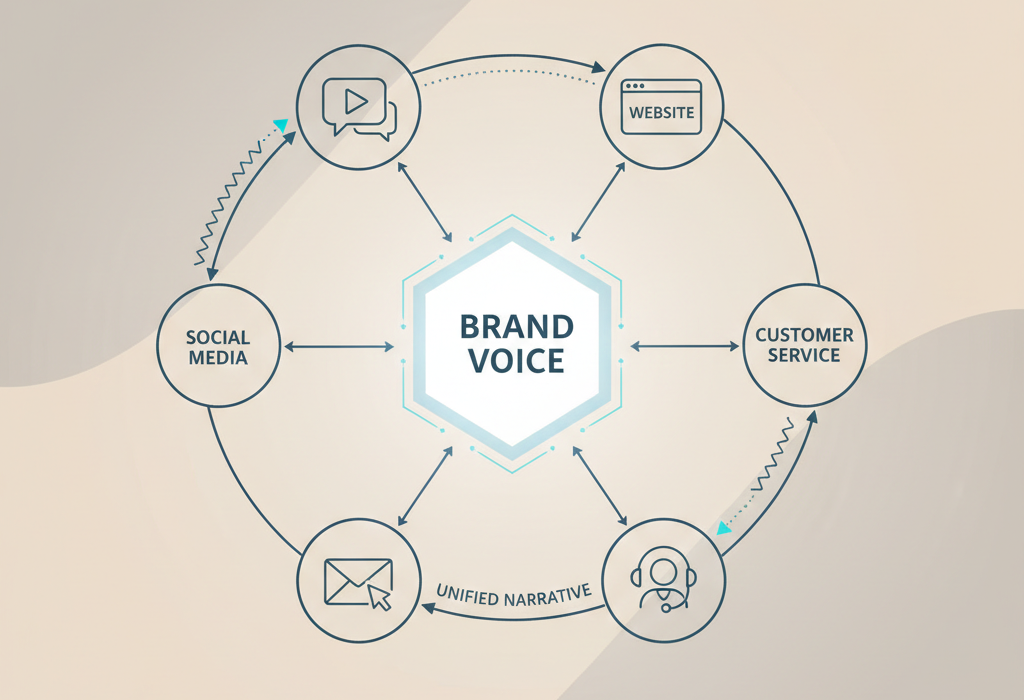
Start by developing a consistent brand voice that reflects your brand personality and values, ensuring your messaging is cohesive across all channels.
If you’re modern and data-driven, your language should be clear, confident, and structured.
If you’re warm and relational, your language should feel conversational and human.
If you’re premium, your language should be polished and minimal.
The voice must align with the promise.
Trust in Action (The David Story)
Here at Get The Clicks, we used to have a guy who worked here, who we’ll call David.
David worked for the company for over a decade, and when he finally quit, he told our CEO Stephan, over dinner, “You know, I still really don’t understand how all that SEO stuff works.”
As you can imagine, Stephan was flabbergasted. How had David worked for this company for so long and learned nothing?
David then elaborated, “Whenever I’d have meetings with clients, I’d spend the first 45 minutes just hanging out. We’d talk about what we’d been up to, how their kids were doing, stuff like that. They always loved to talk. Then in the last 15 minutes, I’d just update them on what we had done for their business, and we’d go on our way.”
David had realized something a lot of people don’t.
When you’re making a sale, you’re not just selling a product. You’re selling yourself.
If the customer trusts you, they’ll buy from you.
In fact, when the companies who worked with David realized he was quitting, a lot of them stopped working with us. They were here for David.
David built the narrative of trust with those companies with his bare hands, brick by brick.
Now here’s the lesson that matters:
If your brand lives only inside one charismatic employee, you don’t have a brand system. You have a personality dependency.
Brand development is about taking what David did naturally and turning it into something scalable.
That means:
- documented communication standards
- consistent check-ins
- visible reporting
- predictable cadence
- structured expectations
Trust cannot depend on one person. It must be embedded into the company.
That is the difference between charisma and brand.
Promoting Your Narrative (Without Losing Your Mind)
Trust isn’t the only thing that builds a good narrative.
Remember when I asked earlier, “Who are you?”
Now it’s time to act like it.
If you’re funny, do funny things.
If you’re bold, be bold.
If you’re refined, refine everything.
Social media is a great place to express personality. Companies like Ryanair leaned into sass and humor. Fashion brands lean into sex appeal. Premium brands lean into minimalism.
But here’s the key:
Personality should reinforce positioning, not distract from it.
If you’re a high-trust, professional service business targeting attorneys or home service operators, your brand voice should reduce confusion, not create it.
That’s why our positioning leans into clarity and measurement. We don’t overwhelm clients with jargon. We simplify. We provide visibility. We structure reporting. We remove “Argghhh.”
Your narrative should make customers feel like they’re in capable hands.
Social Media and Digital Advertising: Amplifiers, Not Foundations
Social media marketing is a powerhouse for brand development, especially for online businesses looking to accelerate growth and connect with their audience.
But social media is not your brand.
It is an amplifier of your brand.
If your core positioning is unclear, social media will just amplify confusion.
Use social platforms to:
- Share proof
- Share behind-the-scenes process
- Show real customer outcomes
- Respond to feedback
- Demonstrate consistency
Advertising works the same way.
Targeted ads can reach the right people. But if your messaging lacks clarity or credibility, traffic will not convert.
Brand development precedes traffic. Always.
Brand Identity: What Your Customers See (and How It Shapes What They Believe)

At this point, your brand strategy should be reaching a point of clarity. You’ve defined who you are, who you serve, how you differentiate, and what you promise. Now it’s time to get into the tangible layer of brand development: your brand identity.
Brand identity is the visible expression of your strategy. It’s how your positioning becomes recognizable in seconds. It’s how someone scrolling quickly through search results, social feeds, or competitor websites subconsciously decides whether you feel legitimate, modern, outdated, risky, premium, approachable, or forgettable.
In today’s digital landscape, developing your brand online is essential. Ensuring your identity is consistent across all digital platforms helps reinforce recognition and trust with your audience. But consistency alone isn’t enough. Consistency must reinforce meaning.
Let’s break this down.
Your Name: The First Signal
Let’s start with the most basic part of your brand identity: your name.
There’s a lot of variety in what you can do here, but the common theme in developing a memorable brand identity is simplicity. That doesn’t mean it’s boring. It means clear.
When brainstorming a name, think about:
- What you sell
- Who it’s for
- The traits of your brand personality
- What you want to signal
- What you want to avoid signaling
DoorDash, for example, simply combines two words to describe what they do. They dash to your door. That’s clarity. Lyft uses a purposeful misspelling to feel modern and approachable. Ford Motor Company uses a founder’s name to signal authority and legacy.
Then you have brands like Google and Apple, which use words that are largely detached from their original meaning. That works at scale. But it works because the companies built meaning into the word over time.
Here’s the practical question you should ask:
If someone hears your company name for the first time, do they feel:
- Clear about what you do?
- Confused but intrigued?
- Or confused and skeptical?
There is a difference between mystery and ambiguity. Mystery can create interest. Ambiguity creates friction.
For service-based businesses, especially, clarity wins more often than cleverness.
Your Logo: Simplicity as a Trust Mechanism
Next, let’s talk about your logo.
A logo should be understandable and memorable from the moment you see it. When you think of famous logos, they are almost always extremely simple: the Nike checkmark, the McDonald’s arches, the Twitter bird, the YouTube play button.
Sometimes all you need for a good logo is the name of your company in a clean, intentional font. Disney, Coca-Cola, FedEx, Google, Amazon. They are largely typographic logos.
The key principle here is cognitive load. The more complex your logo, the more mental effort it requires to process. The more mental effort required, the less likely it is to feel trustworthy at a glance.
This is especially true online, where your logo is often seen in:
- A tiny browser tab
- A mobile header
- A search result
- A social profile image
If it doesn’t scale clearly, it doesn’t serve you.
A logo should do three things well:
- Be recognizable at small sizes.
- Look clean in both color and black-and-white.
- Align visually with your positioning (modern, traditional, premium, approachable).
If your positioning is data-driven and modern, your logo shouldn’t feel cartoonish. If your positioning is family-owned and community-centered, your logo shouldn’t feel like a Silicon Valley startup.
Identity must reinforce strategy.
Your Color Palette: Psychology and Perception
Now let’s talk about color.
Color is not decoration. It’s a psychological cue.
Blue often communicates trust, security, and professionalism. Red can signal urgency, passion, and intensity. Green can suggest growth or stability. Black often communicates sophistication and authority.
But the color’s meaning isn’t absolute. Context matters. Industry norms matter. Contrast matters.
When selecting colors, consider two frameworks:
- Emotional Association
How do people typically interpret this color in your industry? - Contrast and Harmony
Use the color wheel intentionally. Analogous colors (next to each other) create harmony. Complementary colors (opposites on the wheel) create contrast and energy.
The more contrast, the more attention.
The more harmony, the more cohesion.
Both have their place. A premium brand may lean into restraint and whitespace. A high-energy brand may lean into bold contrast.
Here’s a crucial operational point: once you select your colors, document the exact hex codes. The exact RGB values. The exact typography choices.
Consistency isn’t about remembering what shade of blue you “liked.” It’s about codifying the decision so every designer, marketer, and employee reproduces it the same way.
Brand identity without documentation decays quickly.
Taglines, Voice and Signature Elements
Beyond logos and colors, your brand identity can include:
- A tagline or motto
- A recurring phrase
- A mascot
- A distinct photography style
- A specific tone of voice
- Even a recurring design pattern
Taglines like “Just Do It” or “Melts in your mouth, not in your hands” work because they reinforce positioning.
If your brand promise is clarity and ease, your tagline should not be abstract and cryptic. It should be simple and direct.
Your voice is equally important. If you claim professionalism but write in chaotic, unstructured paragraphs full of buzzwords, your identity contradicts your positioning.
If your promise is “Less Argghhh, More Ahhhhh,” then your website, emails, and reports must feel organized, structured, and easy to digest. That alignment between voice and experience is what builds subconscious trust.
Remember: less is more. Simplicity is not laziness. Simplicity is discipline.
Internal Organization and Adaptability: Making Sure Everyone Is on the Same Page
 At this point, you should have your strategic decisions documented. Now comes one of the most overlooked steps in brand development: internal alignment.
Take everything you’ve defined and organize it into a clean, structured document called a brand guide.
This guide should include:
- Your mission and positioning
- Your target audience definition
- Your brand promise
- Voice and tone guidelines
- Logo usage rules
- Color codes and typography
- Messaging pillars
- Examples of correct and incorrect usage
This is not a document for executives only. Every employee should be able to access it.
Why?
Because your brand is not built by your marketing department alone. It is built by:
- Sales calls
- Customer service interactions
- Onboarding emails
- Invoices
- Reporting dashboards
- Follow-up messages
If those experiences contradict your positioning, your brand erodes.
Brand Governance: Turning Strategy Into a System
Most companies create brand guidelines once and then forget about them. That’s not governance. That’s decoration.
Operational brand governance means:
- Assigning ownership (who protects the brand?)
- Reviewing messaging quarterly
- Auditing website consistency
- Reviewing customer feedback trends
- Updating positioning when market conditions shift
Markets evolve. AI changes expectations. Buyer skepticism increases. Your brand must adapt without losing its core.
The balance is delicate. If you don’t evolve, competitors pass you. If you change too aggressively, you fracture trust.
Rebrands: When to Adjust and When to Leave It Alone
When it comes to making changes to your brand, it can feel like balancing on a knife’s edge.
If you don’t change enough, you risk becoming irrelevant. If you change too much, you destroy recognition.
A fantastic example of a subtle rebrand was when Dunkin’ Donuts shortened its name to just “Dunkin.” The change was small, but the message was clear: they are not just donuts. They are coffee, breakfast, and more.
The lesson is this: evolve the expression without betraying the promise.
Now contrast that with a failed rebrand attempt, like Cracker Barrel’s modernization push. Their core brand was nostalgia and Southern hospitality. When they modernized aggressively, customers felt something sacred had been removed.
The key decision filter when considering rebranding is:
- What is the core promise customers rely on?
- Does this change reinforce or weaken that promise?
- Are we solving confusion, or creating it?
Rebrands should reduce friction, not create headlines.
Optimizing for Search Engines: Making Your Brand Discoverable
 Search Engine Optimization (SEO) is not separate from brand. It is brand clarity expressed algorithmically.
SEO involves optimizing your website and content to rank higher in organic search results. But at a deeper level, SEO rewards clarity.
If your positioning is vague, your keywords will be vague. If your messaging is unfocused, your content will be unfocused. Search engines struggle to categorize unclear brands.
Start with keyword research. Understand what your target audience is actually searching for. Incorporate those terms naturally into your content.
But SEO is not just about keywords. It includes:
- Website speed
- Mobile responsiveness
- Technical health
- Secure hosting
- Structured headings
- Clear navigation
Search engines reward websites that create a seamless user experience. That is not separate from the brand. That is a brand in digital form.
A strong brand feels organized. An organized website ranks better.
Creating a User-Friendly Website Experience: Where Brand Becomes Behavior
 Your website is often the first real interaction someone has with your brand. Not your logo. Not your tagline. Not your social media bio. Your website.
And here is where the brand either proves itself or collapses.
A website is not a brochure. It is not a digital business card. It is not a design exercise. It is a behavioral environment. It shapes how people feel, how long they stay, what they click, and whether they reach out.
If your brand promise is clarity and professionalism, your website must feel structured and easy to navigate. If your brand promise is premium, your website must feel intentional, restrained, and polished. If your brand promise is approachability, your website must feel welcoming, not corporate and cold.
Brand is not what you say you are. Brand is how the experience feels in motion.
Structure Reduces Anxiety
When someone lands on your homepage, they are subconsciously asking:
- Am I in the right place?
- Do these people understand my problem?
- Is this going to waste my time?
- What happens next?
If those answers are not clear within seconds, friction increases. And friction kills conversions.
A user-friendly website requires more than attractive visuals. It requires:
- Clear hierarchy of information
- Obvious calls to action
- Logical page flow
- Fast loading speeds
- Mobile responsiveness
- Visible trust signals
Slow pages feel sloppy. Broken links feel risky. Confusing navigation feels careless. These are not technical errors. They are brand signals.
Security indicators, such as HTTPS and visible trust badges, reduce subconscious fear. Clean layouts reduce cognitive overload. Structured sections create a sense of control.
If your brand is “Less Argghhh, More Ahhhhh,” your website must feel calm, organized, and deliberate. It must feel like someone thought through the journey before the visitor arrived. That emotional shift from chaos to clarity is what increases conversion.
Measurement and Optimization: How to Know Your Brand Is Working
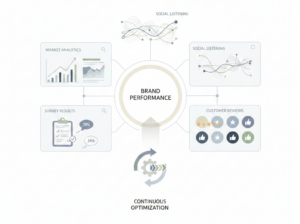 You’ve defined your strategy. You’ve built your identity. You’ve structured your website. Now comes the question most business owners eventually ask:
How do I know this is actually working?
Brand is not intangible magic. It leaves measurable footprints.
Tracking brand equity and brand value requires aligning your metrics with your positioning. If your brand promise is clarity and professionalism, you should see:
- Higher average session duration
- Lower bounce rates
- More direct traffic over time
- Higher close rates
- More repeat business
- More referrals
Brand performance shows up in behavior.
Surveys: Useful, But Handle With Care
The most basic tactic is to ask customers directly through surveys. Surveys provide insight into how customers perceive your brand and their experience with you.
But surveys have limitations. Customers often avoid harsh criticism if they feel identifiable. That’s why anonymity matters. When feedback is detached from consequence, honesty increases.
Keep surveys concise. Ten questions maximum is usually sufficient. Use consistent wording across time periods to measure trends accurately.
Instead of only asking, “Were you satisfied?” consider questions like:
- What words come to mind when you think of our company?
- What mattered most when choosing us?
- Did we set expectations clearly?
- Did you feel confident in our expertise?
- Would you refer us? Why or why not?
The difference between “Have you heard of Brand A?” and “Name brands you think of in X category” is massive. One measures recognition. The other measures recall.
Recall is stronger.
Reviews and Organic Signals
Reviews are public brand signals. They influence prospects before you ever speak to them.
Encourage honest reviews. Incentivize participation appropriately, but never manipulate sentiment. Pay attention not just to star ratings, but to language patterns.
Are customers mentioning professionalism? Clarity? Speed? Transparency? Responsiveness?
That language is your real brand.
Also monitor:
- Customer service complaint trends
- Email tone shifts
- Call sentiment
- Social media comments
- Repeat purchase rates
Brand strength shows up in consistency. If someone says, “Whenever I have problem X, I call company Y,” that is brand equity in action.
Behavioral Metrics: The Real Truth
Data does not replace brands. It validates it.
If you claim clarity but your bounce rate is high, something is misaligned. If you claim professionalism but your close rate is low, expectations are likely mismatched.
Measurement should not be overwhelming. It should be structured. That’s why transparency systems matter. When clients can see performance clearly, confusion decreases and trust increases.
The goal is not just more leads. The goal is better leads, higher close rates, and longer retention. Brand affects all three.
Industry and Use-Case Solutions: Applying Brand Strategy to Different Business Models
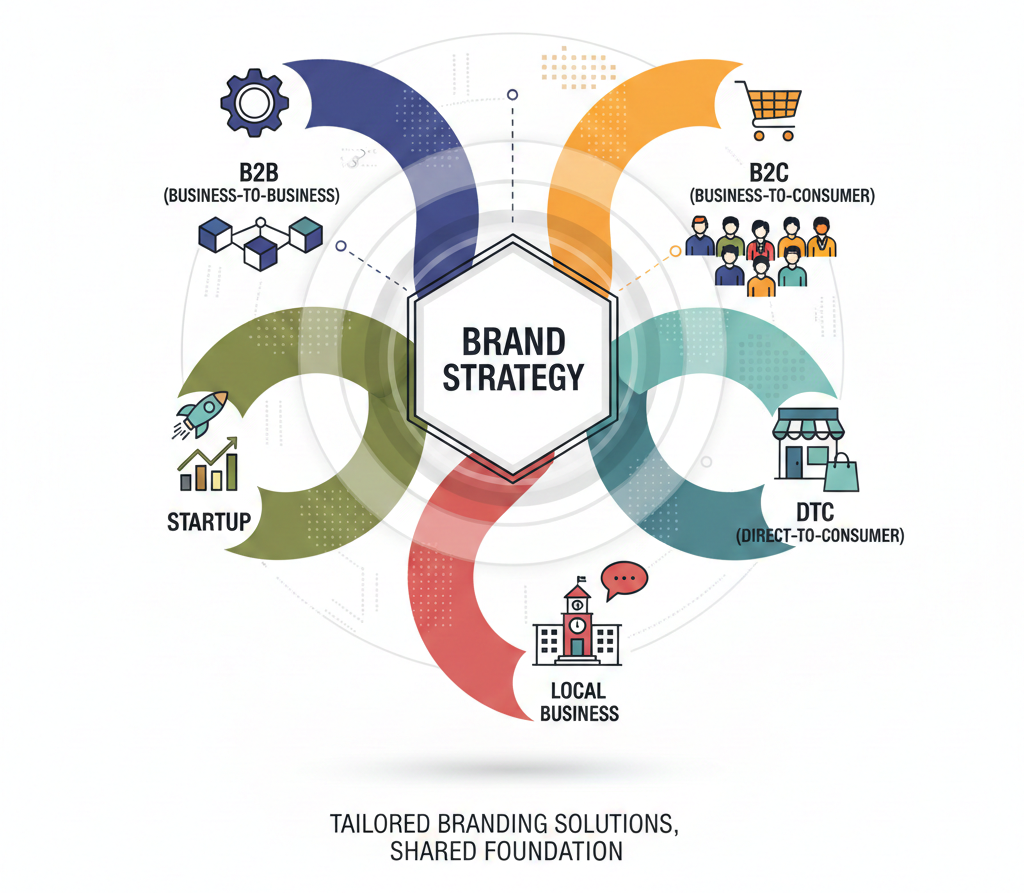
Now that we’ve explored the general principles, let’s apply them to specific contexts. Brand development does not look identical across every business model. The core mechanism remains the same, but the emphasis shifts.
B2B: Rational Decisions, Reduced Risk
In B2B environments, purchasing decisions are often driven by risk mitigation. Decision-makers are accountable. Mistakes are visible. Budgets are scrutinized.
In this context, your brand must lean heavily into:
- Proof
- Case studies
- Measurable results
- Clear process documentation
- Realistic expectation setting
“Better” is not persuasive. “Proven” is persuasive.
Overpromising in B2B destroys credibility quickly. Professional tone, structured communication, and visible reporting become central brand pillars.
Trust here is built through consistency and competence.
B2C (Retail or Marketplace): Split Audience, Split Strategy
When selling through a middleman such as a retail store or marketplace platform, you must appeal to two audiences: the distributor and the end consumer.
The distributor needs to believe you are stable, profitable, and reliable. That requires clear margins, sales data, and operational reliability.
The end consumer needs clarity and appeal. Decisions are often made quickly. Visual clarity, packaging design, and price transparency matter heavily.
Brands must operate on both levels without contradiction.
DTC: Control and Responsibility
Direct-to-consumer models remove the middleman. That gives you control, but also full responsibility.
You control the experience from first click to post-purchase support. That means your brand must extend beyond marketing into logistics, support, and follow-up communication.
Customer service becomes central to brand identity. Fast responses, clean returns processes, and proactive communication build loyalty.
Omnichannel consistency matters. Website, email, social, and even physical packaging should feel aligned.
Startups: Clarity Over Hype
Startups face a unique challenge. You may not have extensive proof yet. You may not have testimonials or large case studies.
In that case, clarity becomes your strongest asset.
Avoid vague superlatives like “world-class” or “game-changing” unless you can define them concretely. Instead, focus on:
- Clear explanation of the problem
- Clear explanation of your solution
- Transparent roadmap
- Founder credibility
- Early wins
Startups evolve quickly, so rigid branding systems can become restrictive. Keep your brand flexible but anchored in your mission.
Local Service Businesses: The Power of Familiarity
Local businesses operate in proximity-based trust environments. Customers want to know:
- Are you reliable?
- Will you show up on time?
- Are you fair?
- Do you understand the local market?
Community involvement, visible reviews, recognizable team members, and consistent branding across trucks, uniforms, and digital presence all matter.
Local brand strength often correlates with repeat business and word-of-mouth. Reputation spreads quickly in defined geographic areas.
Clarity, responsiveness, and professionalism become the core brand signals.
Conclusion: What It All Boils Down To
Brand development is about far more than providing a good product for a good price. It is about building a system that consistently reduces uncertainty.
It is about telling a story that aligns with reality. It is about creating alignment between what you promise and what you deliver. It is about making your customer’s life easier while proving you are capable of delivering what you claim.
Perception leads to trust.
Trust leads to conversion.
Conversion leads to retention.
Retention leads to equity.
If you skip the perception layer, everything downstream weakens.
A strong brand development strategy for online businesses does not just drive growth. It creates stability. It creates clarity. It creates loyalty. It creates recognition that compounds over time.
You are going to have a reputation whether you design it or not. The question is whether that reputation will be intentional.
Now it is time to write your own story. Not as decoration. Not as hype. But as a structured, measurable, disciplined system that turns confusion into clarity.
Less Argghhh. More Ahhhhh.