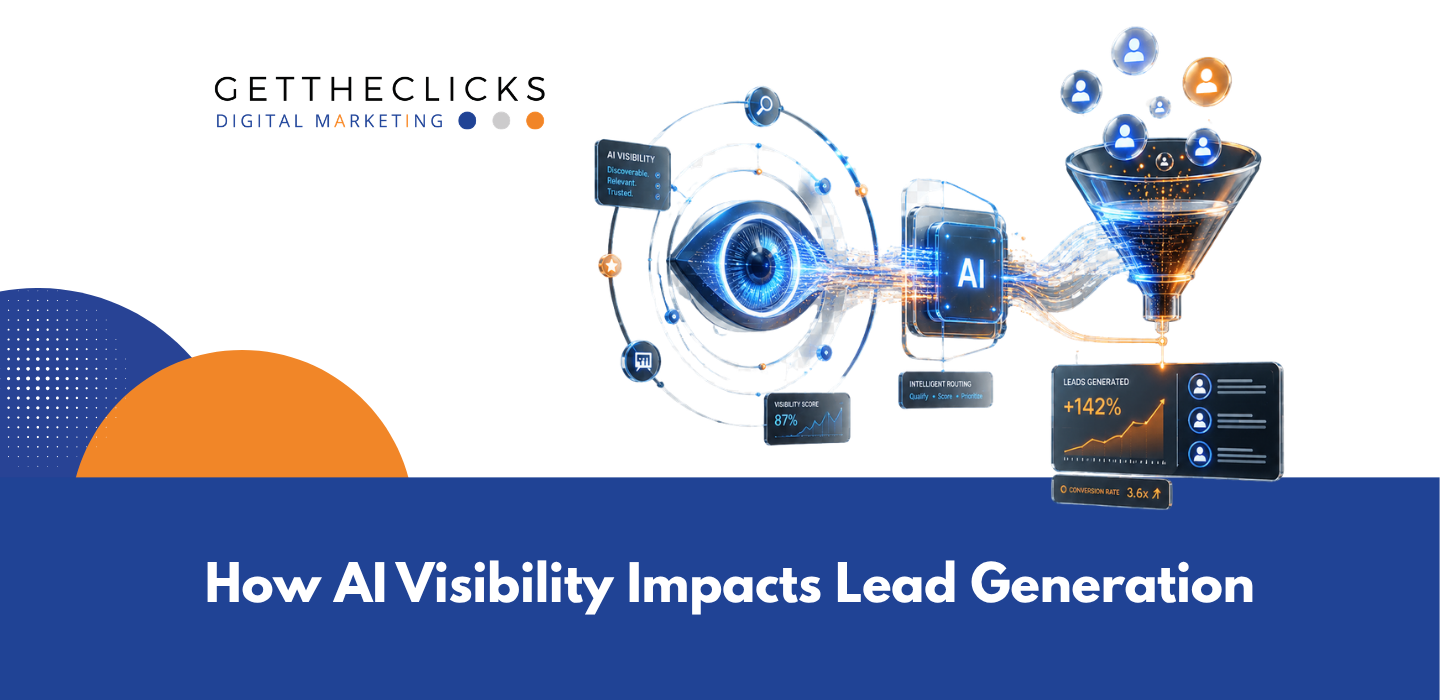
People no longer rely solely on traditional search engines to discover businesses online. Many buyers now use AI-generated answers, summaries, and recommendations before visiting a website. This shift changes how companies attract attention, build trust, and generate leads while creating new ways to improve visibility in AI search results.
AI visibility determines whether AI systems can recognize and recommend your expertise during early research stages. Businesses with clear authority signals and well-structured content are more likely to appear in AI-driven recommendations and attract qualified leads online.
What AI Visibility Means
AI visibility refers to how easily AI systems can recognize, understand, and recommend your business across digital channels. This includes conversational search engines, AI assistants, recommendation systems, and generative answer tools that summarize information for users.
Traditional SEO focused heavily on rankings, backlinks, and keyword placement. AI visibility goes further because AI systems analyze contextual meaning, topical consistency, and authority patterns across multiple sources. A business may still rank well in search results while failing to appear in AI-generated answers if its expertise is difficult for machines to interpret.
AI systems also evaluate whether your business demonstrates reliable authority. Brand mentions alone are not always enough. Companies need structured expertise signals that help AI tools confidently connect their business to relevant questions and recommendations.
Why AI Visibility Is Changing Discovery
Search engines once presented users with long lists of websites to compare manually. AI systems now compress that process by delivering direct answers and curated recommendations before users explore multiple pages.
As a result, fewer businesses receive visibility during the early stages of customer research, increasing the importance of understanding the role of content in AI visibility. When buyers ask AI tools for recommendations, they are often shown only a small selection of companies considered trustworthy and contextually relevant.
This shift changes user behavior in several ways:
- Users spend less time independently comparing websites.
- Conversational searches replace short keyword searches.
- AI systems prioritize businesses with clear topical authority.
- Structured explanations and educational content become more valuable.
Businesses now need content that is understandable to both human readers and AI retrieval systems. Publishing content alone is no longer enough. AI systems must also be able to interpret expertise clearly and connect it to user intent.
Why AI Visibility Matters for Lead Generation
AI visibility directly affects how potential customers discover and evaluate your business before making contact. Many users now rely on AI-generated summaries because they want quick, trustworthy answers without extensive research.
When your business consistently appears in AI-generated responses, trust often develops earlier in the buying journey. Users may already view your company as credible before visiting your website because AI recommendations themselves influence perception.
This changes the quality of inbound leads. Businesses may receive fewer overall clicks while attracting prospects who already understand their services and trust their expertise. These visitors are often further along in the decision-making process and may convert more efficiently.
AI visibility also shortens research timelines. Instead of manually comparing dozens of providers, buyers increasingly rely on AI systems to organize information and narrow options quickly. Businesses that appear during this stage gain an advantage by entering the customer’s consideration process earlier.
How AI Systems Evaluate Businesses
AI systems analyze patterns that help determine whether a business appears trustworthy, relevant, and authoritative. These systems evaluate much more than keywords.
Topical depth plays a major role. Businesses that consistently explain related subjects in detail are easier for AI systems to interpret than those that publish scattered or disconnected content. AI models look for relationships between topics, services, and expertise signals.
External validation also matters. Reviews, citations, interviews, expert contributions, and industry mentions help reinforce authority beyond your own website. AI systems use these signals to confirm credibility across the wider digital ecosystem.
Structure is equally important. Well-organized pages with clear headings, contextual explanations, and logical topic relationships improve retrieval accuracy. AI systems often pull information from specific sections rather than entire webpages, so clarity at the section level matters more than ever.
Businesses with inconsistent messaging create problems for AI interpretation. When service descriptions, positioning, or expertise claims vary across websites and platforms, AI systems struggle to identify the company’s true specialization.
AI Visibility and Buyer Trust
AI-generated recommendations increasingly influence trust before direct interaction occurs. When a business appears repeatedly inside AI-generated responses, users begin associating that company with expertise, credibility, and reliability.
This shift changes how buyers evaluate providers, as trust now forms earlier in the customer journey. Many users narrow their options before ever visiting a company website, relying on AI summaries and recommendations to guide decisions.
As a result, priorities for lead gen in AI advertising now extend beyond traditional traffic metrics alone. Businesses must focus on visibility, authority, and contextual relevance across AI-driven platforms.
AI visibility shapes perception, consideration, and conversion readiness long before traditional analytics can fully measure user intent, making early trust signals increasingly important for attracting qualified leads online.
AI Visibility and Traditional SEO
Traditional SEO still matters because search engines continue to index and rank content. However, rankings alone no longer guarantee visibility during AI-assisted discovery.
AI systems evaluate broader patterns of expertise rather than relying heavily on isolated keywords. Businesses that publish disconnected pages targeting individual search terms often struggle to establish strong topical authority.
Conversational search behavior also changes optimization priorities. Users now ask detailed questions in natural language, and AI systems prefer businesses that answer those questions clearly and comprehensively.
This means businesses should focus on:
- Building connected topic ecosystems.
- Publishing educational and high-context content.
- Structuring information clearly for retrieval.
- Maintaining consistent authority signals.
The goal is no longer just appearing in search results. Businesses must also become understandable and retrievable inside AI-generated responses.
Why Machine Readable Expertise Matters
Having expertise is not enough if AI systems cannot interpret it effectively. Many businesses provide excellent services while publishing vague or repetitive content that lacks contextual clarity.
Machine-readable expertise depends on organization, depth, and consistency. AI systems analyze how concepts connect across webpages and platforms to determine whether a company demonstrates reliable authority.
Shallow content performs poorly over time because AI systems increasingly prioritize contextual depth over keyword repetition. Generic articles that offer little unique insight rarely establish meaningful authority signals.
Businesses strengthen AI visibility by explaining concepts thoroughly, organizing related information logically, maintaining consistent messaging across platforms, and providing clear contextual explanations that help AI systems accurately interpret their expertise.
Educational resources, FAQs, glossaries, comparison pages, and original research often perform well because they help both users and AI systems better understand expertise.
The Importance of Structured Data and Retrieval Optimization
Structured data helps AI systems categorize and interpret information accurately. Schema markup, contextual hierarchy, and organized content structures improve machine readability.
Retrieval optimization also matters because AI systems often pull information from individual sections instead of entire pages. Large blocks of unfocused content make retrieval harder and reduce clarity.
Businesses should prioritize:
- Clear headings and subheadings.
- Concise contextual explanations.
- Logical content hierarchy.
- Topic continuity across pages.
Well-structured information improves discoverability, strengthens AI interpretation, and creates a better user experience for visitors while supporting long-term content performance.
These practices help search engines and AI assistants understand relationships between topics, surface relevant answers faster, and maintain consistency across pages. Organized formatting improves engagement by making content easier to scan, navigate, and trust quickly.
External Signals and Brand Mentions
External signals and brand mentions play a major role in AI visibility. AI systems do not evaluate businesses in isolation. Instead, they analyze authority across the broader digital ecosystem.
Reviews, interviews, podcasts, industry citations, guest articles, and expert mentions all contribute to credibility. Even unlinked brand mentions can strengthen contextual authority and recognition.
Consistency across platforms is equally important. Businesses that maintain aligned messaging across websites, directories, social platforms, and industry publications create stronger trust signals.
AI systems increasingly evaluate consensus and reputation across multiple sources. Companies that appear repeatedly in trustworthy environments are easier for AI systems to recommend with confidence.
Strong external validation improves discoverability, reinforces expertise, and helps businesses build long-term authority within their industry and search presence.
AI Visibility and Local Lead Generation
Local lead generation is also changing as conversational search and AI-powered recommendations become more common. Users now ask highly specific questions about nearby services instead of browsing broad categories manually.
AI systems evaluate contextual trust signals when recommending local businesses. Review sentiment matters more than simple review quantity because AI models analyze the language and consistency inside customer feedback.
Businesses with detailed, trustworthy reviews often appear more credible than those with large numbers of generic reviews.
Local consistency also affects discoverability. Business names, service descriptions, location details, and expertise signals should remain aligned across directories and platforms. Inconsistent information weakens retrieval confidence and reduces visibility.
Common Mistakes That Reduce AI Visibility
Common mistakes can significantly reduce AI visibility. Many businesses weaken their performance by publishing repetitive content with little contextual depth. AI systems increasingly recognize surface-level content patterns and prioritize expertise-driven information instead.
Other common mistakes include:
- Inconsistent messaging across platforms.
- Weak topical organization.
- Overemphasis on keywords instead of clarity.
- Outdated or fragmented content structures.
- Lack of external authority signals.
Businesses that focus only on traditional keyword optimization often overlook how AI systems evaluate contextual meaning, topical relationships, and retrieval confidence. Poor structure and inconsistent information make it harder for AI systems to accurately assess relevance.
Companies that prioritize clarity, organization, credibility, and expertise create stronger signals that improve discoverability, trust, and long-term visibility across AI-driven search experiences.
Building an AI Visibility Strategy
An effective AI visibility strategy starts with understanding how customers research problems and evaluate providers. Businesses should create content that answers practical questions clearly while connecting related topics into structured knowledge systems.
Strong AI visibility strategies include building connected topic ecosystems, publishing educational and authoritative content, structuring information clearly for retrieval, maintaining consistent expertise signals across platforms, and strengthening external validation through reviews, citations, and industry mentions.
Businesses should also think beyond traffic metrics alone. AI-influenced visitors often arrive with stronger intent and greater trust because much of the research process has already occurred through AI-generated summaries and recommendations.
Grow AI Visibility With Get the Clicks
At Get the Clicks, we help businesses improve AI visibility through SEO, structured content, authority building, and digital strategy. We create clear, trustworthy online experiences that strengthen discoverability, credibility, and long-term growth across search engines and AI-driven platforms. Schedule your consultation today!